Most schools and educational facilities in Saudi Arabia rely on central or semi-central direct-expansion (DX) air conditioning, whether as packaged rooftop units or ducted split systems serving several classrooms from a single unit. The choice makes economic sense: lower installation cost than chilled-water systems, simpler maintenance, and the flexibility to expand as a building grows in phases. But it also places real responsibility on the maintenance team, because a mid-term breakdown does not just mean operational inconvenience - it means closed classrooms or postponed exams.
This guide walks through how the system works, the operating challenges unique to a school environment, and the preventive maintenance schedule we apply on educational projects across the Eastern Province and Riyadh.
How a Central DX System Works in a School
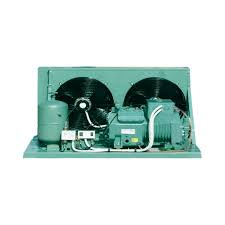
The system consists of an outdoor condensing unit housing the compressor, condenser coil, and condenser fan, and a DX coil located inside an air handling unit or indoor unit, where refrigerant expands directly and absorbs heat from air returning from the classrooms before it is distributed through ductwork to multiple rooms. Control is typically handled through a zone thermostat or a basic building management system (BMS) that follows the school schedule and shuts the system down automatically outside operating hours to reduce energy use.
The key difference from chiller-based systems is that the entire refrigeration circuit, from compressor to evaporator, runs directly on refrigerant with no water intermediary. That makes checking refrigerant charge and superheat/subcooling readings a core part of any serious maintenance program, exactly as with other commercial DX equipment.
Why Schools Are a Different Operating Environment
An educational facility presents several engineering considerations that set it apart from a typical commercial building:
High occupancy density: A classroom holds 25 to 35 students in a limited floor area, raising the internal thermal load and outdoor-air ventilation demand well above what a similarly sized office would require.
Intermittent, seasonal operation: The system runs daily for a fixed window, typically 6 to 7 hours, then shuts down completely for two months or more during summer break. That extended idle period accelerates the degradation of run capacitors, allows dust to accumulate on coils, and can reveal slow refrigerant leaks that went unnoticed during continuous operation.
Dust and sand loading: Many schools sit in open areas or on the outskirts of cities where condenser coils and air filters take a heavier dust load than average, calling for a shorter cleaning interval than a typical commercial site.
Budget and procurement constraints: In public schools especially, maintenance is funded through predefined annual budgets, which makes scheduled preventive maintenance far more cost-effective than emergency repairs that require exceptional approvals and administrative delay.
Recommended Preventive Maintenance Program
The table below summarizes the four inspection tiers for central DX systems in educational facilities:
| Frequency | Tasks | Engineering Objective |
|---|---|---|
| Weekly | Inspect and clean air filters as needed | Maintain airflow and prevent evaporator icing |
| Monthly | Check condensate drains, electrical connections, and breaker condition | Prevent water leaks and heat buildup in electrical panels |
| Quarterly | Measure refrigerant charge, superheat and subcooling, inspect condenser fins | Confirm cycle efficiency and prevent compressor stress |
| Before school term start | Full post-summer inspection: trial run, capacitor testing, leak check, airflow balance across classrooms | Confirm full readiness before students arrive |
Most Common Failures in School AC Systems
Clogged Filters and Evaporator Icing
A dirty filter reduces airflow across the evaporator coil, dropping coil temperature below freezing and forming an ice layer that stops cooling entirely. This is the most frequent cause of "the AC isn't cooling" complaints in classrooms, and the fix is simple: regular weekly cleaning instead of waiting for symptoms to appear.
Low Refrigerant Charge From a Slow Leak
A gradual drop in refrigerant charge shows up as weaker cooling and rising power consumption with no obvious external cause. Measuring superheat and subcooling every quarter catches this type of leak before it damages the compressor, the most expensive component in the system.
Duct Leakage and Air Loss
Poorly sealed duct joints lose part of the conditioned air before it reaches classrooms furthest from the unit, leaving some rooms warmer than others even though the system runs at full capacity. Visual inspection of flexible duct connections and external insulation should be a standard part of the quarterly check.
Capacitor Failure After Summer Shutdown
Compressor and fan run capacitors lose capacity over time and with heat exposure, and a long summer idle period accelerates this wear. A trial run and capacitor value test with a dedicated meter before the school term starts prevents a sudden failure in the first week of classes.
Ventilation and Indoor Air Quality in Classrooms
Mechanical maintenance alone does not guarantee a healthy learning environment. Reference standards such as ASHRAE 62.1 set minimum outdoor air rates per student in a classroom, well above what a typical office requires given the occupancy density. One of the most common field mistakes is partially or fully closing the outdoor air damper to reduce cooling load and save energy - this raises indoor CO2 concentration noticeably within two hours of continuous class sessions, with a direct impact on student focus and attention.
The correct practice is to set the outdoor air ratio correctly at design stage or during any later adjustment, confirm that fresh air intakes are not blocked by accumulated dust, and where budget allows, use CO2 sensors for continuous monitoring rather than relying on periodic inspection alone.
Need a maintenance contract for your school or educational facility?
Elfarida Ice designs a preventive maintenance schedule tailored to your unit count and school calendar.
Request a Maintenance Quote